How can organisations assess the impact of Employers Against Domestic Abuse activities?
29.06.2026
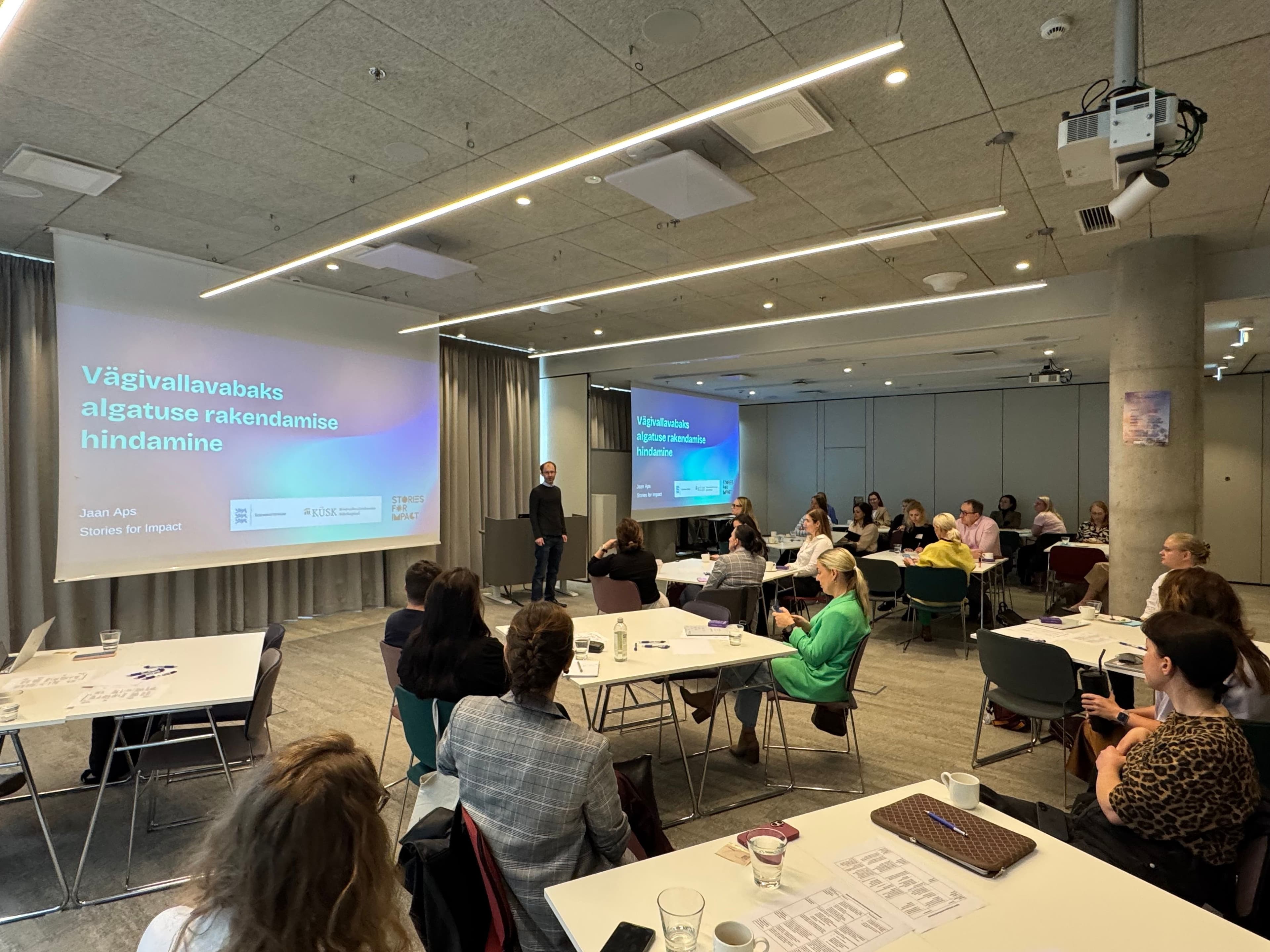
Over the past year and a half, 22 organisations employing more than 30,000 people in total have joined the Employers Against Domestic Abuse initiative. This scale makes it increasingly possible to assess, in a more systematic way, the impact of workplace activities aimed at increasing awareness and prevention of domestic abuse.
It was for this purpose that, together with Jaan Aps, CEO of the social impact assessment consultancy Stories For Impact and the members of the initiative, we developed the Employers Against Domestic Abuse impact assessment model. Its aim is not to evaluate or compare members of the initiative, but to provide those who wish to use it with a practical tool that helps them understand which activities are effective, what steps to take next, and how to consistently shape a workplace culture that is more aware of domestic abuse.
According to Aps, organisations generally have two types of development activities. The first are activities where impact can be measured through a change in the volume of outputs produced over a given period of time, or through the number of events that have occurred during a certain period, such as workplace accidents. The second type of development activities, however, are influenced by many different factors, and it is not possible to precisely isolate the impact of a single indicator. Examples include organisational culture, leadership quality and capacity for innovation.
“In organisational development, both types of issues need to be addressed, and shaping a domestic abuse-aware and safe working environment clearly belongs among the initiatives that are more complex to assess,” said Aps.
It is also difficult to assess the initiative’s wider societal impact, as this is shaped not only by the activities of Employers Against Domestic Abuse members, but also by many other factors. However, it is possible to measure the effectiveness of specific activities – for example, how employees’ knowledge and attitudes change, whether they are prepared to respond in difficult situations, or how visible and systematically addressed the topic of domestic abuse is within the organisation.
A three-level assessment model
The impact assessment model consists of three interconnected parts, which can be used either as a whole or separately, depending on the organisation’s needs.
In any case, it is worth starting with the roadmap. With just a few hours of work, it gives the member organisation a systematic overview of the ways in which the initiative can be implemented, helps map the initial situation in addressing domestic abuse, and supports the selection of the most important next steps. The roadmap serves simultaneously as a planning, assessment and knowledge management tool, helping to maintain continuity even when people within the organisation change.
Pre- and post-training questionnaires help not only to assess the success of training sessions, but also to measure how employees’ knowledge, attitudes and readiness to notice a need for help and support colleagues in difficult situations change. Using the roadmap before planning training also helps organisations think through the context in which the training will take place, including preparatory and follow-up activities that support its success. In addition, the roadmap makes it possible to record and compare the participation rates and results of training sessions carried out during different periods.
The questionnaire for assessing the impact of implementing the initiative's activities enables organisations to regularly evaluate how employees perceive the organisation’s readiness to address domestic abuse. This makes it possible to track the development of awareness, attitudes, readiness to respond and a supportive workplace culture over a longer period of time. This type of assessment is most valuable when repeated regularly, for example once a year. Completing the roadmap in advance also helps organisations first plan and then monitor the implementation of these surveys.
One of the strengths of the assessment model is its carefully considered wording. As this is a sensitive topic, it is important that the questions are designed in line with the principles of a trauma-informed approach. In this way, they help gather reliable information while reducing the risk of re-traumatisation.
A shared assessment model creates value not only for the members themselves. It also supports the development of the Vägivallavabaks initiative as a whole. Cooperation between employers on this scale in preventing domestic abuse is relatively unique internationally. The more organisations use a shared methodology, the better it becomes possible to understand which activities have the greatest impact and how to support employers even more effectively.

The experience of the North Estonia Medical Centre
According to Kai Kuuspalu, Head of Prevention at the North Estonia Medical Centre, one of the beacon members of the initiative, impact assessment is important for them above all because it helps monitor changes in people’s awareness, attitudes and organisational development. It helps assess whether the activities support people in need, including those using violence, in reaching the help they require, and identify which processes or supportive measures still need to be implemented within the organisation.
“A clear position on domestic abuse is part of our organisation’s values and working principles. It is important in shaping the organisation’s communication culture more broadly,” said Kuuspalu. She added that, as a hospital, the topic also has an important connection with their day-to-day work. “Noticing patients’ need for help, regardless of whether the concern arises in the case of a patient who has come to the emergency department or has been admitted for inpatient treatment.”
According to Kuuspalu, a shared assessment model also creates an opportunity to learn from the experience of other members of the initiative and to compare the impact of different activities.
Ultimately, impact assessment is not an obligation for the initiative's members, but an opportunity. When we can plan our activities based on knowledge rather than assumptions, it becomes possible to create more lasting change and contribute to the prevention of domestic abuse in a more systematic way. The better we collectively understand the impact of our activities, the better we can support both existing and new members, and increase the impact of the Vägivallavabaks initiative as a whole.
The development of the activity assessment model was supported by the Ministry of the Interior and the National Foundation of Civil Society.